• DUDES Club providing health and wellness support for men in Quesnel

    DUDES Club providing health and wellness support for men in Quesnel

    There was a sense of brotherhood in downtown Quesnel as self-identifying men gathered to regain a sense of pride, purpose and fulfillment in their lives.

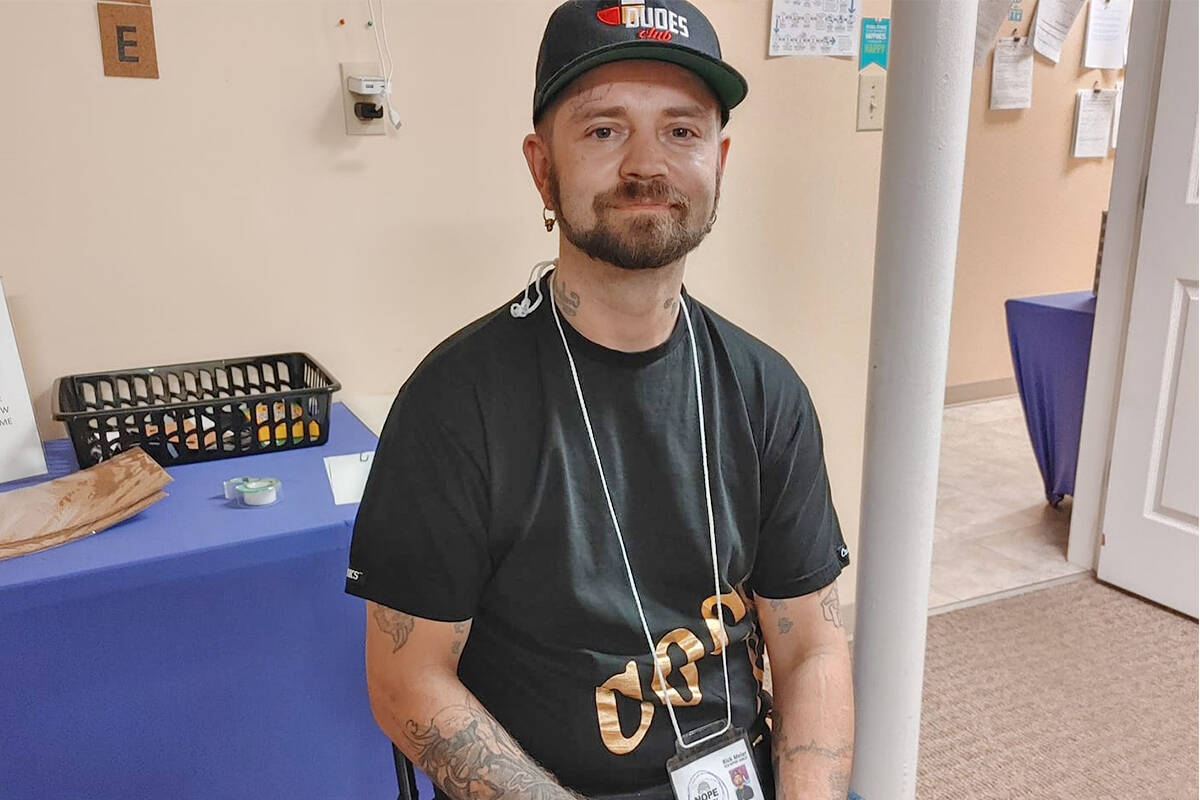
    On Thursday, Nov. 4, DUDES Club facilitator Richard (Rick) Meier was excited to see how many guys would be stopping in.

    The meeting starting at 7 p.m. was the second to be held indoors at the Northern Network of Peers for Equality (NOPE) office at 325 St. Laurent Avenue.

    The first DUDES Club meeting in Quesnel was hosted at a city park on Sept. 16.

    “It got started in east Vancouver, and it’s an Indigenous program that is about men’s mental health, physical health and overall well-being,” he said of DUDES Club.

    “I was able to get in contact with them and get it started here, which I’m super grateful for because there is not a lot of support groups out there for men, especially in towns like Quesnel, so it’s good.”

    Read More: Report ‘confirms’ mental health care is improving in B.C.

    According to its web page, DUDES Club mission is to facilitate a participant-led community for men’s wellness with activity-based clubs that prioritize supportive relationships, engagement in healthcare and local Indigenous worldviews.

    At the meetings, participants talk about “men’s stuff”, Meier said, without going into detail.

    “Which is good because sometimes men need a place to get their stuff out,” he added.

    “So we talk about men’s health and well-being, and programs that are here in town and other programs that can be started.”

    Participants also chat about what activities they would like to do at the next bi-weekly meeting held Thursdays at 7 p.m. For example, one had suggested at their earlier meetings that they go gold panning, although winter could make it difficult.

    “There is one DUDES Club further up north that’s doing a trail recovery program right now, so there are lots of opportunities out there,” Meier said, noting they are working with the group in Prince George.

    Read More: B.C. adding addiction treatment, transition services, minister says

    He has reached out and invited Indigenous elders to participate and lead their meetings with a land acknowledgment and traditional prayer.

    DUDES Club participants wanting additional support can access peer support and advocacy through the NOPE office, a safe and inclusive space for all including women and members of the LGBTQIA2S+ community.

    Access to food security, clothing, hygiene and harm reduction supplies and social system navigation is available.

    “We started with the men because there was really a need for that,” said Kim Meier who helped co-find NOPE with her spouse Richard, Desiray Turrell and Brittany Bold-de-haughton.

    When she first went into recovery, Meier was involved with Pathways Addictions Resource Centre in Penticton.

    “It was so pivotal my recovery too, and I did a women’s group,” she added, noting she had also worked with the South Okanagan Women in Need Society (SOWINS) on their sex worker program.

    Sex work is not often talked about in B.C.’s north, Meier said. The sex worker population in Quesnel is very hidden.

    “I think there’s something in the works for women, but I don’t know what that looks like as of yet.”
  • DUDES Club and Movember: Indigenous men taking ownership of their health

    DUDES Club and Movember: Indigenous men taking ownership of their health

    Author: Lyana Patrick, Assistant Professor of Indigenous Health, Simon Fraser University

    Why do so many men grow moustaches every November? It started in Australia in 2003 when a small group of men grew moustaches to support men’s health and prostate cancer. From humble beginnings, the Movember movement has focused important international attention on issues like men’s mental health and suicide prevention, as well as prostate and testicular cancer.

    But can a moustache save a life? According to DUDES Club members, it can.

    DUDES Club is an innovative, community-driven men’s health program incorporating Indigenous approaches to healing and wellness. With help from Movember, a three-year research project with the DUDES Club demonstrated how a grassroots initiative could be mobilized to work by, for and with Indigenous men.

    Indigenous men’s health

    Research shows that men in general are less likely to seek medical attention than women in addition to being three times more likely than women to die by suicide. Indigenous men’s health is further impacted by a lack of research on health services directed specifically at Indigenous men. In addition to the impacts of harmful masculine norms such as being “strong and silent,” independent and emotionless, Indigenous men endure the impacts of historical injustices through ongoing experiences of racism, violence and social exclusion.

  • The Power of Connections:

    The Power of Connections:

    How a Novel Canadian Men’s Wellness Program is Improving the Health and Well-Being of Indigenous and Non-Indigenous Men

    Iloradanon Efimoff *
    University of Manitoba , Canada , efimoffi@myumanitoba.ca
    Lyana Patrick *
    Simon Fraser University , Canada , lyana_patrick@SFU.ca
    Viviane Josewski
    University of British Columbia, Okanagan, Canada , viviane.josewski@ubc.ca
    Paul Gross
    University of British Columbia, Canada , paul@dudesclub.ca
    Sandy Lambert
    DUDES Club Elder and External Liaison , Canada , sandy@dudesclub.ca
    Victoria Smye
    Western University , Canada , vsmye@uwo.ca

    Abstract

    The DUDES Club is a novel men’s health and wellness organization founded in 2010 in Vancouver, BC. Since 2017, the DUDES Club has rapidly expanded in Northern BC and, with the help of a partnership with the First Nations Health Authority, has grown to include 40 sites in British Columbia and 2 sites nationally. In this study, we analyze data from interviews (n = 5) and 15 focus groups (n = 101) conducted as part of a program evaluation with DUDES Club members, Elders, providers, and health care professionals. We focus on men’s experiences with the DUDES Club to identify four main themes in the data: brotherhood and community, accessible health care information, disrupting colonial constructions of masculinity, and systemic and structural challenges. We conclude with policy recommendations.

    Every two weeks in Vancouver’s Downtown Eastside (DTES) neighbourhood, a group of men gather together for a few hours in the evening to share food and ideas, to learn and have fun, and to take a break from their often-difficult daily realities. This unlikely gathering started 10 years ago when frontline workers recognized the need for a safe and supportive space for men to gather. What started as a support group organized around the Positive Living Outreach Program at the Vancouver Native Health Society has blossomed into a national model for men’s health and well-being. This group is called the DUDES1 Club.

    Indigenous Peoples in Canada experience a disproportionate burden of both mental and physical health issues (Nelson & Wilson, 2017; Rotenberg, 2016). These health inequities must be understood in light of colonialist and neo-colonialist practices (such as residential schools, the Sixties Scoop, and the overrepresentation of Indigenous children in care), widespread poverty, homelessness, and racism (Currie et al., 2012; Patrick, 2014; Press, 2019; Spence et al., 2016). In healing from past and ongoing effects of colonization, culture is a key source of strength for many Indigenous communities (Assembly of First Nations & Health Canada, 2015; Gone, 2013). An emerging body of evidence for “culture as treatment” points to the significance of interconnectedness in healing and underscores the need to incorporate Indigenous cultural practices into health programming (Barker et al., 2017).

    Generally, men are less likely to seek medical attention with regards to their mental well-being. This tendency can have tragic consequences: Men are 3 times more likely to die by suicide than women (Goldenberg, 2014; Statistics Canada, 2019). Indigenous men are at an even higher risk for suicide (Kumar & Tjepkema, 2019). Men’s high rates of suicide might, in part, be due to inadequate diagnosis and treatment of men’s mental health issues (Oliffe et al., 2010; Wide et al., 2011). To this end, the American Psychological Association issued its first guidelines for practice with men and boys (Pappas, 2019). Conformity to dominant ideas of masculinity that stress male independence and fearlessness (“the strong silent type”) may further lead men to disregard their health and avoid seeking timely health care (Goldenberg, 2014, p. S142), which is a concern that is particularly pressing for older men (Tannenbaum & Frank, 2011).

  • The DUDES Club a brotherhood for men’s health

    The DUDES Club a brotherhood for men’s health

    A brotherhood for Paul A. Gross MD CM CCFP Iloradanon Efimoff Lyana Patrick Viviane Josewski Keith Hau MSc Sandy Lambert Victoria Smye RN PhDmen’s health.

    Abstract

    Problem addressed In Canada, there are few health promotion programs for men, particularly programs focused on indigenous and other men marginalized by social and structural inequities.

    Objective of program To build solidarity and brotherhood among vulnerable men; to promote health through education, dialogue, and health screening clinics; and to help men regain a sense of pride and fulfilment in their lives.

    Program description The DUDES Club was established in 2010 as a community-based health promotion program for indigenous men in the Downtown Eastside neighbourhood of Vancouver, BC. Between August 2014 and May 2015, 150 men completed an evaluation survey developed using a logic model approach. Responses were analyzed based on the 4 dimensions of the indigenous medicine wheel (mental, physical, emotional, and spiritual). Evaluation results demonstrated high participant satisfaction and positive outcomes across all 4 dimensions of health and well-being: 90.6% of respondents indicated that the DUDES Club program improved their quality of life. Participants who attended meetings more often experienced greater physical, mental, and social benefits (P < .05).

  • Mens Wellness Program Evaluation Report

    Mens Wellness Program Evaluation Report

    Indigenous people in Canada historically had strong and rich traditions of land-based health and wellness and experience, knowledge, and tools for healing. Oral history suggests the population was characterized by good health and longevity, enhanced by ceremonial and spiritual practices for well-being. Contact with European settlers and colonial policies and practices of systemic oppression of Indigenous culture, language and traditions, residential schools and the “60s scoop” resulted in intergenerational trauma and marginalization of Indigenous communities and continue to have major social, economic and health consequences today. Compared with the general population, Indigenous men are at greater risk of depression and suicide and suffer a disproportionate burden of other mental health issues. Further, men are generally less likely than women to seek help with health issues and they face many barriers when accessing appropriate mental health services. As a result, men suffer in silence far too often. Research indicates many benefits of men’s-only spaces for health engagement to help promote healthy lifestyles, connections and strong mental health among men.

    Created in 2010 by men living in Vancouver Downtown Eastside, the DUDES Club Society is aimed at building solidarity and brotherhood between members and promoting men’s health through education, dialogue, and health screening clinics. Currently, the program operates men’s group sessions in more than 40 communities across British Columbia. Since 2019, the program has been delivering its services in several correctional facilities.

    The purpose of the project is to conduct evaluation of the Men’s Wellness in Provincial Correctional Centres program implemented by DUDES Club Society. The evaluation was focused on the portion of the program activities contracted through Provincial Health Services Authority. The evaluation was started in March 2021 and completed in September 2021, and examines program activities implemented from January 30, 2019 to August 30, 2021 at three correctional facilities, including: Prince George Regional Correctional Centre (PGRCC) Vancouver Island Regional Correctional Centre (VIRCC) and Nanaimo Correctional Centre (NCC).

  • DCS Evaluation Report 2020

    DCS Evaluation Report 2020

    Founded in 2010 in Vancouver’s Downtown Eastside, in 2020 the DUDES Club Society (DCS) partners with groups in more than 40 communities in British Columbia, and several communities in other parts of Canada. The DUDES Clubs (DCs) operate both in Indigenous communities and in urban sites (See appendix 4 for a map of locations). From 2013-2016, Co-Founder Dr. Paul Gross, Dr. Lyana Patrick, Sandy Lambert (Elder), and Dr. Vikki Smye from the University of British Columbia, conducted a study of 150 of the men who had participated in DCs in the four communities we were in at that time. In 2020, as DCS became its own incorporated entity and registered charity, we determined to conduct a followup evaluation. We had 139 participants respond across 23 different communities. Participants were informed that the purpose of the survey was:

    “We want to collect this info from our DUDES CLUB SOCIETY Evaluation Report 2020 & 2013-2016 5 participants so that we can ensure that 1) we are in continual process of improving what we do, 2) we can measure the impact of our efforts, 3) we can share this information with our funders and the public, and 4) we can use the evidence of what we do to promote the importance of investing more in men’s health in the future. By filling this out it will contribute to improving the health of all men!”

  • DUDES Club Society Annual General Meeting

    DUDES Club Society Annual General Meeting

    DUDES Club Society is happy to announce our first Annual General Meeting!

    WHEN: December 2nd, 9-10am.

    WHERE: Online.

    Please contact us at info@dudesclub.ca for more information

  • Hello world!

    Hello world!

    Hello DUDES!

    Welcome to our new website!

    (more…)